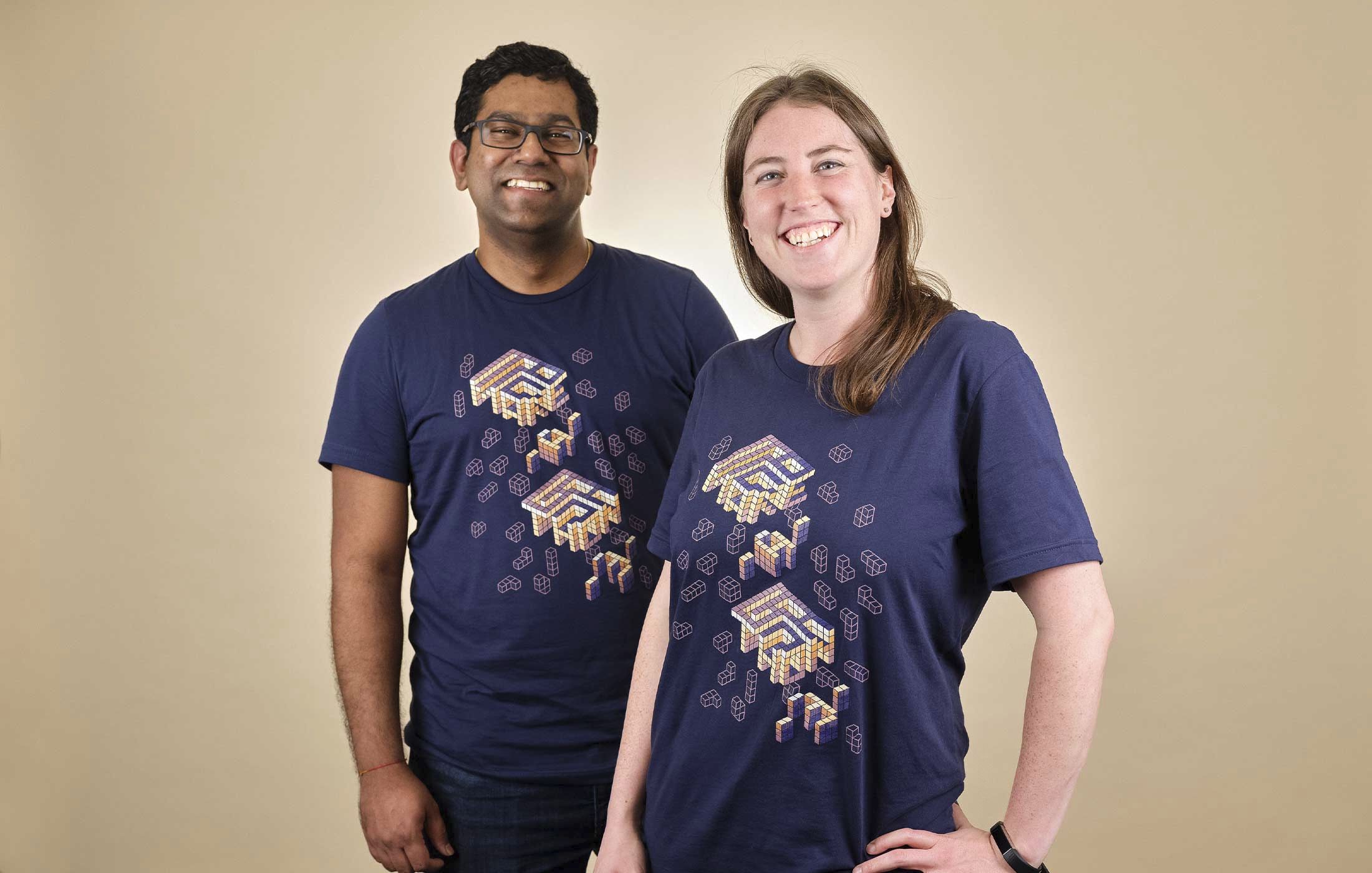
Head of Design at Orb

I build brands, products, and the teams behind them.

I've been designing for twenty-eight years and leading design teams for ten, at Sharethrough, BuildingConnected, Netlify, and now Orb. Lately I've been building Curator Co. on TypeSafe's Jev. It's a taste engine for films, series, books, albums, and games, and it's live right now as an invite-only beta.

Connect on LinkedIn
JUSTIN.CHUANHEAD.OF.DESIGN
Justin Chuan
APPLICANT · CREATE.YOUR.OWN.ROLE

Ask Jev one question about me

A yes/no question, answered by Jev against this page. It tells you which section decided it. Twenty questions per visitor per day.

A note for TypeSafe

The role I'd create.

Your posting for a role you haven't scoped yet has a line in it about a designer of worlds. I read that and thought, well, that's the job. A model that's reliable, fast, and exact deserves a company that looks and reads the same way, and I'd like to own that end to end: the brand, the website, the shape of the docs and the SDK references, the launches, and the demos that make a typed judgment click for a developer in about ten seconds.

I've built a brand function from nothing four times now, at Sharethrough, BuildingConnected, Netlify, and Orb, and I've led rebrands that actually made it out the door, the latest being Orb's this January. Those were mine end to end: the research, the brief, the identity, the rollout, and the arguments with leadership along the way. I also did the hiring for every one of those teams myself, from writing the roles to making the offers. I still write, I still direct, and I still make things with my own hands. If you're asking where the spike is, it's brand and identity systems and the people who make them. Around that I'm capable rather than expert: product design, web, film, writing, and enough engineering to have shipped a Next.js app to production. I'm not a machine learning engineer and I won't pretend to be one. I read the docs the way a practitioner does and build until I find the edges.

I'm also a customer. I spent the last few days in Jev's docs and cookbooks, found a few of those edges, and shipped anyway. First Curator Co., and then this page, which is running Jev in the question bar up top and in the panel below. Your mission is intelligence dependable enough to live inside everyday software. It's mine too, and it has been for years, just aimed at design: I've argued, in writing and in every team I've run, that design is too important to be left to the specialists. Put those side by side and they're the same idea. A judgment that code can branch on is a judgment anyone gets to use, and I want to help make that true.

Resume (PDF) Ask me for an invite

The role I would create, drawn as a desktop of retro windows: role.txt, brand, docs, a Jev demo, a launch, and a punch card as the applicant record.

Jev read this application

The six things TypeSafe's posting says it looks for, each asked as a Noul question against this page and the resume. The numbers are Jev's, unedited, run on September 21, 2026 with jev-1.13.0.

  1. Spiky and well-rounded0.91
  2. Complete ownership0.87
  3. First principles and lived experience0.82
  4. Understands LLMs, joys and limits0.79
  5. Cares about the mission0.81
  6. Five-plus years in high-performing teams0.90

Jev thinks the weakest claim is understands llms, joys and limits at 0.79 and the strongest is spiky and well-rounded at 0.91.

Experience

Where I've worked, and what I built there.

January 2024 – Present

Head of Design

Orb

  • Head of DesignNovember 2025 – Present
  • Brand Design LeadJanuary 2024 – November 2025

Orb is the revenue design platform behind usage-based billing and pricing for companies like Vercel, Replit, Supabase, and LaunchDarkly. I joined in early 2024 to lead brand design and became Head of Design in November 2025. This January we launched Orb's new brand: a new wordmark, a hybrid typographic system, a palette built on RGB, and a new website, with foundational work from How&How and a build by Monogram. We also threw out the stock photography and replaced it with candid portraits of our customers in their own offices, which I'm still happy about. The announcement went out over Business Wire and was carried by VentureBeat.

January 2021 – July 2023

Director of Brand Design

Netlify

Netlify gives developers a global, production-ready platform so individuals and teams can get straight to building. I was brought on to build the Brand Design team and lead a major transition in Netlify's identity, while supporting Marketing with design services and better process. I hired designers prominent in their field, developed Netlify's brand attributes and compass with the co-founders and customers, and shepherded the new visual identity through its rollout across the organization and its partners.

September 2018 – June 2020

Head of Brand and Communications Design

BuildingConnected, then Autodesk Construction Solutions

  • Head of Brand and Communications Design, AutodeskMarch 2019 – June 2020
  • Design Director, Brand and Communications, BuildingConnectedSeptember 2018 – March 2019

BuildingConnected and Autodesk Construction Solutions set out to solve enduring problems in the construction industry, from the design phase through to operations. I joined BuildingConnected as its second brand designer and built a team of seven humble, thoughtful, and talented people. We supported the entire organization, influencing how design was perceived and applied, and used LUMA and Design Thinking methods to define complex problems and solve them elegantly. I returned briefly in late 2020 as a contract UX designer.

September 2012 – June 2018

Senior Manager of Visual Design

Sharethrough

  • Senior Manager of Visual Design2017 – 2018
  • Visual Design Team Lead2016 – 2017
  • Lead Visual Designer2015 – 2016
  • Senior Visual Designer, Visual Designer2012 – 2015

Sharethrough helps the world's largest marketers and trading desks serve high-performing native ads into the feeds of leading publishers. I developed the brand from the ground up over six years, growing from the first visual designer into the leader of the team. My identity work for Sharethrough and its events drew praise from design leaders like Khoi Vinh, and the "Ads Can Fit In" outdoor campaign I created was written about in multiple publications.

January 2014 – January 2016

Co-founder and Designer

Capslock

Capslock was a studio focused on the design and development of web and mobile applications, with a process built around Design Thinking. I worked closely with Roman Mars to develop the 99% Invisible website and refresh its identity. The abbreviation "99pi" was my work and is still widely used to refer to the podcast. Other projects included site design for the InterContinental Hotels Group and presentations for Metromile.

May 2009 – September 2012

Graphic Designer and Copywriter

Bleu Marketing Solutions

Bleu was a full-service marketing agency creating marketing assets and interactive experiences for clients including Apple, HP, and Cisco. Alongside design, the studio relied on my writing to develop campaign content for these global brands.

1998 – 2000

Where it started

CNET Networks, DoughNET

I began as a creative services intern at CNET in the summer of 1998, converting mock-ups into web pages for sites like Snap.com and MySimon. A front-end and design internship at DoughNET followed. Most of those techniques are long antiquated, but being exposed to that work culture so early shaped a good part of my foundation as a designer.

Built on Jev

Curator Co. is a taste engine built on TypeSafe's Jev.

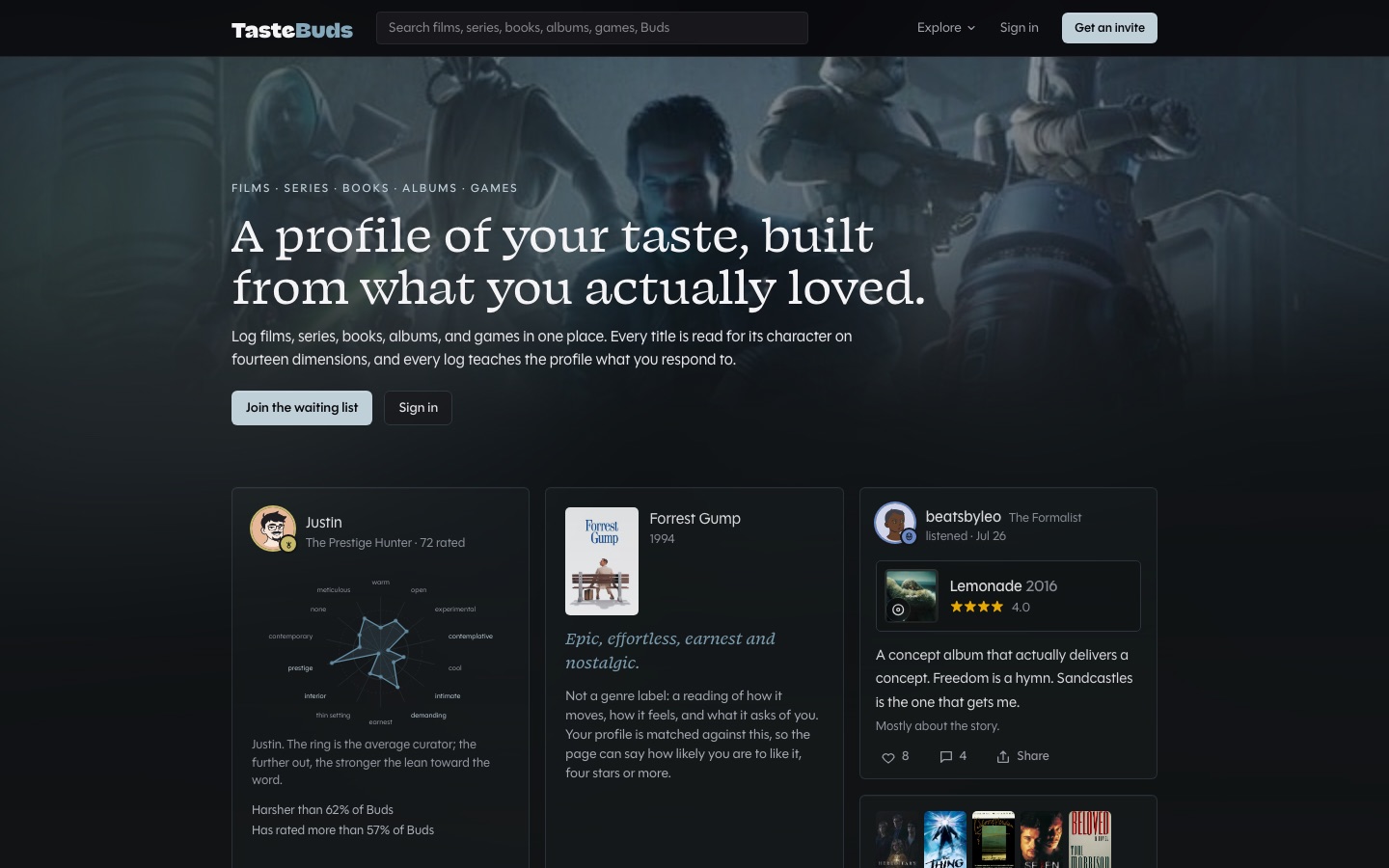
It's a place to log films, series, books, albums, and games together. Every title gets read on fourteen dimensions of character and tone, every log teaches your profile a little more, and every page tells you the odds that you'll rate something four stars or better.

Curator Co. home page: a profile of your taste, built from what you actually loved
curatorco.app
  • 14dimensions of character and tone
  • 12curator archetypes
  • 47Jev-backed modules
  • 24hours of building, over three days

Where Jev sits

The code owns the workflow, the math, and the lookups. Jev steps in wherever the code needs to understand what a work is like or what a reviewer meant. That turns out to be a lot of places: scoring a title on the fourteen dimensions, reading a review for tags and spoilers, writing content notes, pairing two works, finding the question that splits a room, noticing when someone's taste has drifted, moderating, cleaning up imports, and summing up a year.

Every call goes through one metered function, and each work gets scored once and cached. I treat Jev as a primitive, not a chatbot, and the whole thing is simpler for it.

What the model taught me

Small questions beat big ones. I don't ask Jev to rate a film; I ask fourteen narrow questions about its character and tone and let the code do the rating. Confidence isn't accuracy, so anything the site shows as a probability has to survive a calibration script first. Blending in the audience score looked like an obvious win and tested worse, so out it went. Small samples will flip a result on you, which is why the site says where each number came from. A plain guard question catches off-topic input better than any clever prompt I wrote. And Jev is fast enough to sit in the request path, which changes what you're allowed to design. The question bar at the top of this page comes back in about a second.

What the numbers say

Calibration here is a script, not a promise. It hides a slice of ratings, rebuilds the profile without them, and checks Jev's predictions against what it hid. While the beta is small it runs on public MovieLens ratings, and on those Jev alone did better than blending in the audience score, so the number you see on a page is Jev's answer with nothing mixed in.

On my own fifty-eight films it flips, and the audience score wins. Small samples tell their own story, and I'd rather the site say so than pretend otherwise. The real test starts when real members log real ratings, and the script runs again after any change to a prompt or the profile.

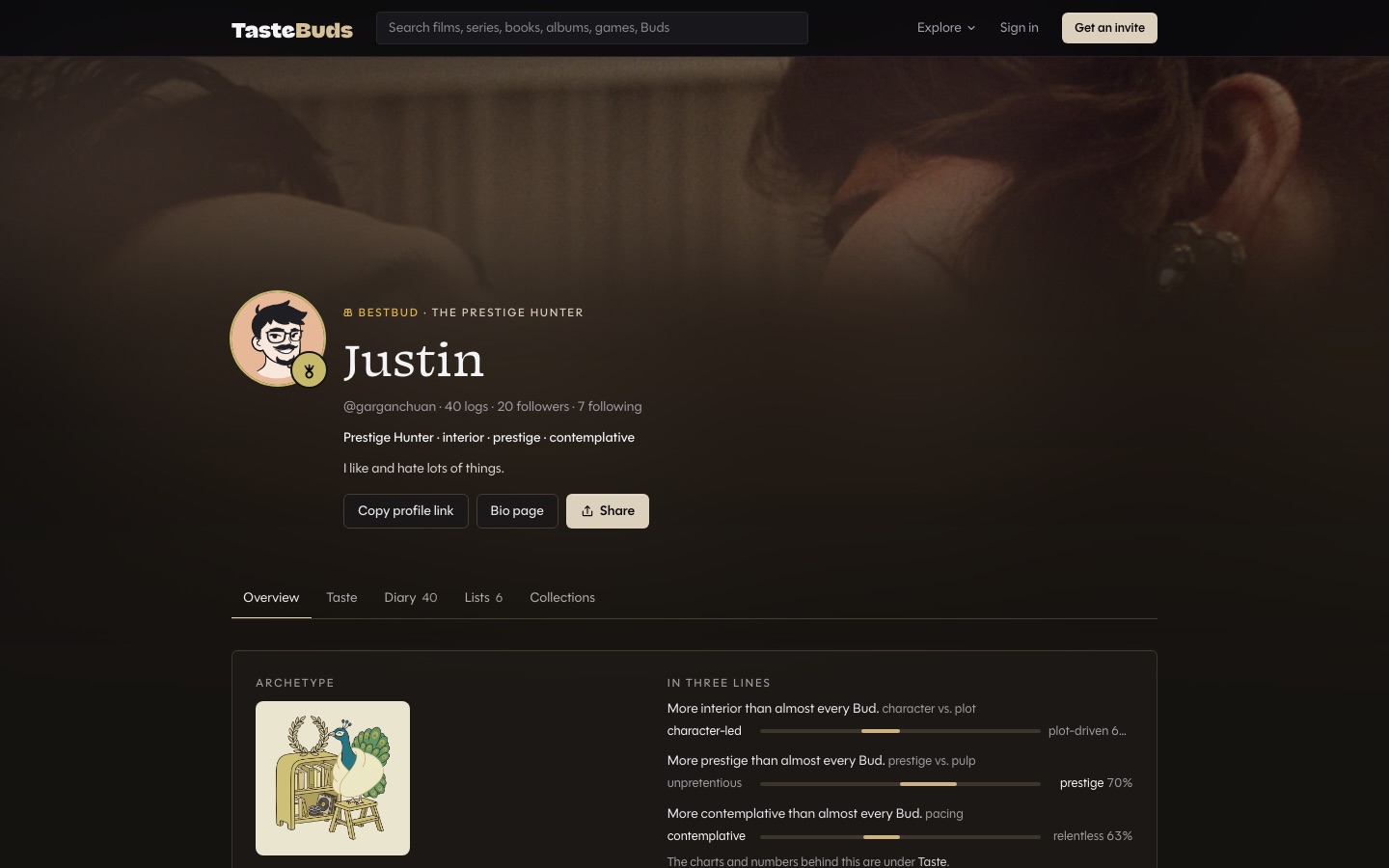
A curator profile with archetype and the three dimensions that define it
A profile in three lines: the dimensions where you differ most from every other curator.
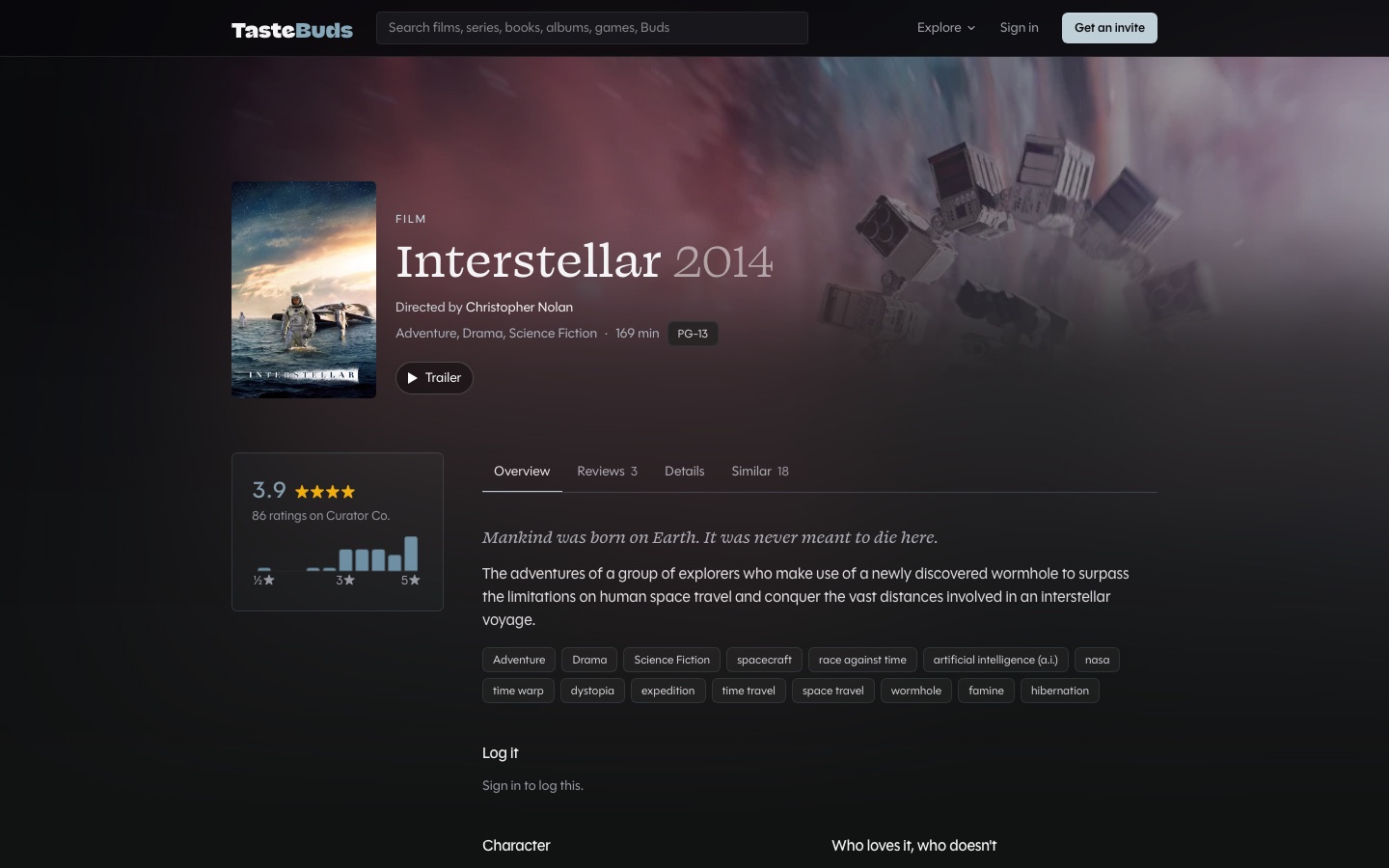
A film page tinted to its artwork, with the chance you'd love it
Every page tints to its artwork. Character, not genre, decides what it sits next to.
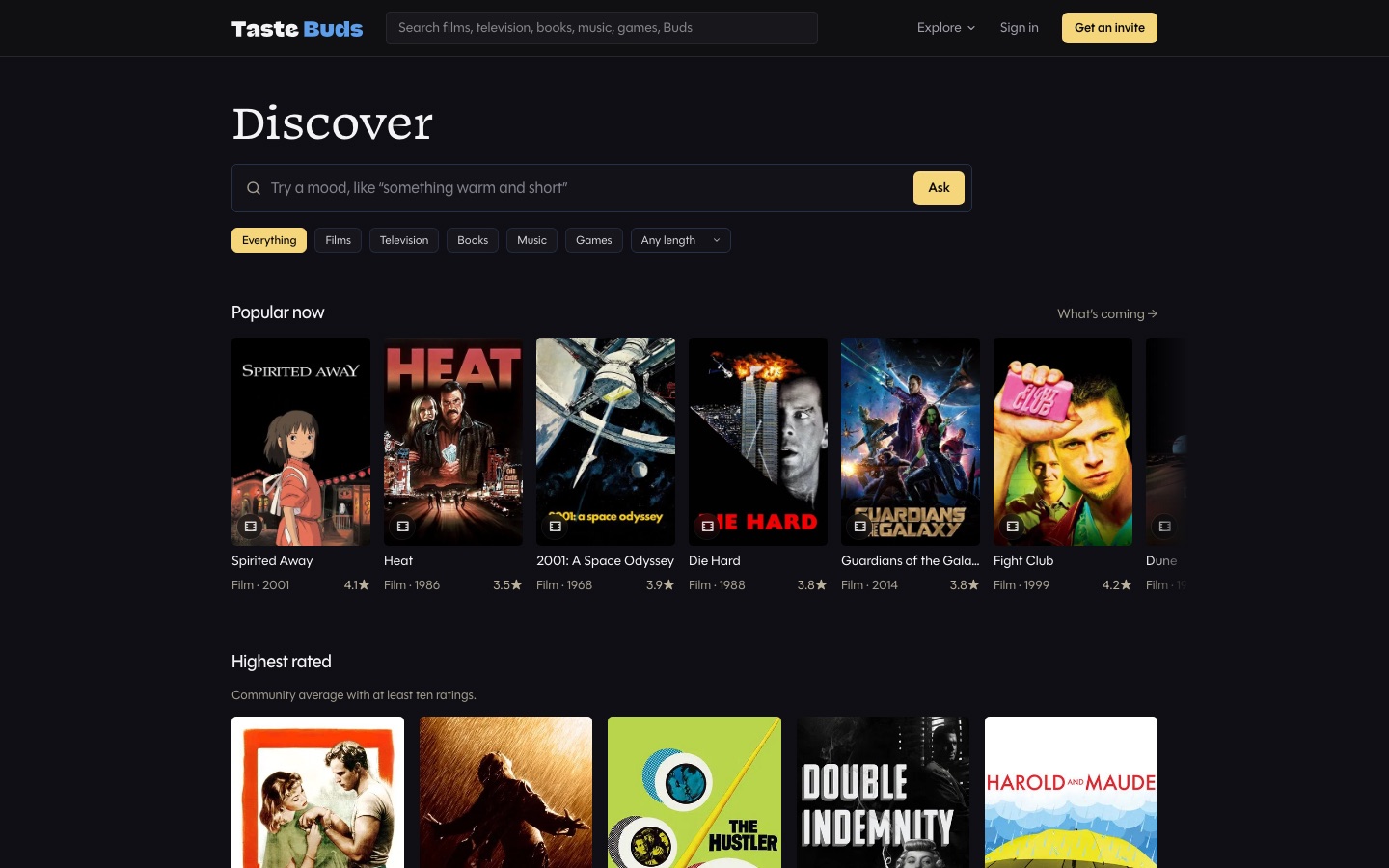
Discover page with a top pick, a mood prompt, and a blind spot
Discover: a top pick, a mood you can type, and a blind spot Jev found in your taste.

How it was built

263 commits in about twenty-four working hours, spread across September 19 to 21, 2026. It's Next.js and Postgres on Neon, deployed on Netlify. There's a Chrome extension that puts Curator Co. on IMDb, Rotten Tomatoes, Letterboxd, and Netflix. Imports come from Letterboxd's RSS feed and Netflix's export, never from scraping. Sign in with Google, passkeys, Turnstile, invites with a waiting list, and a palette pulled from each work's artwork that tints its page and its charts.

Also after hours

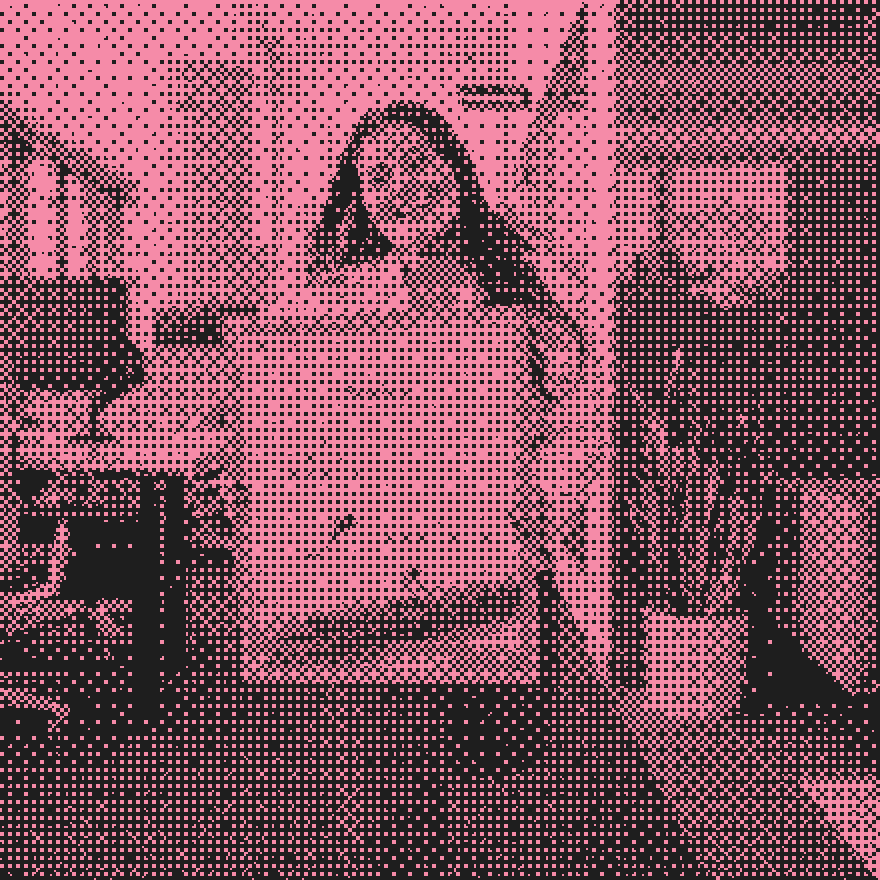
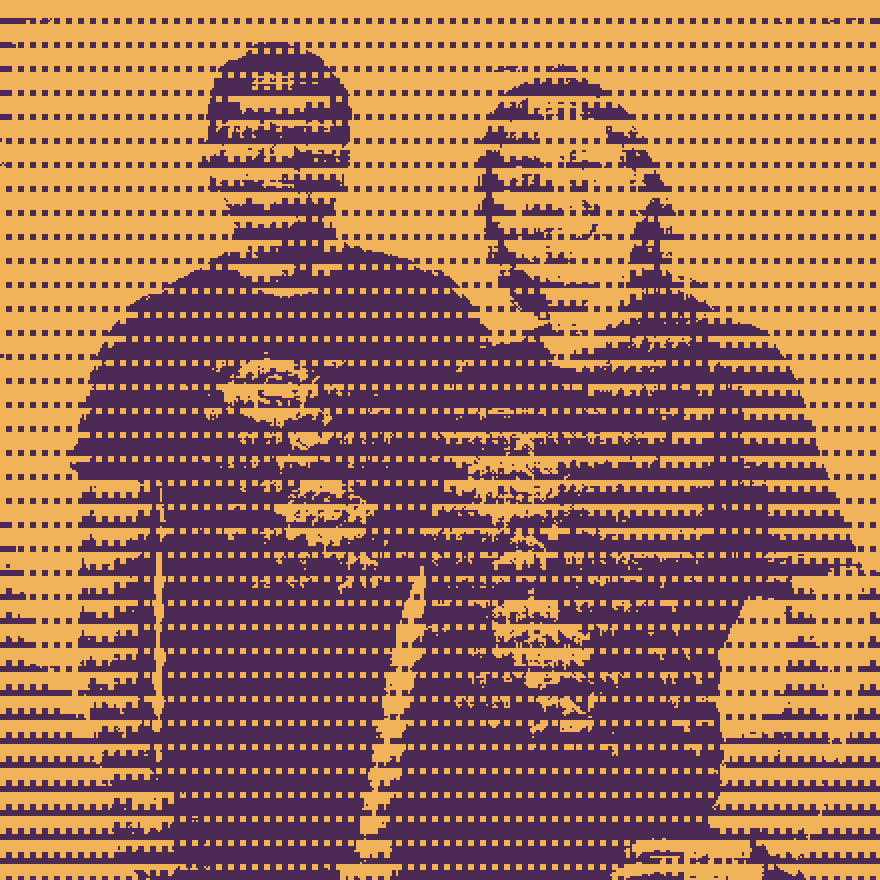
Pixcii turns a photograph or a video into a glyph mosaic. Each cell snaps to the nearest ink in a curated palette and gets a mark whose weight matches its tone, so the marks read as shading rather than decoration. You can export a poster at print resolution, a vector file, a video, or a little embeddable player. Made with the Orb design team.

Selected work

Identities, campaigns, and events.

Six projects from the last decade. Each one opens into a gallery with notes on the work.

Who's reading?
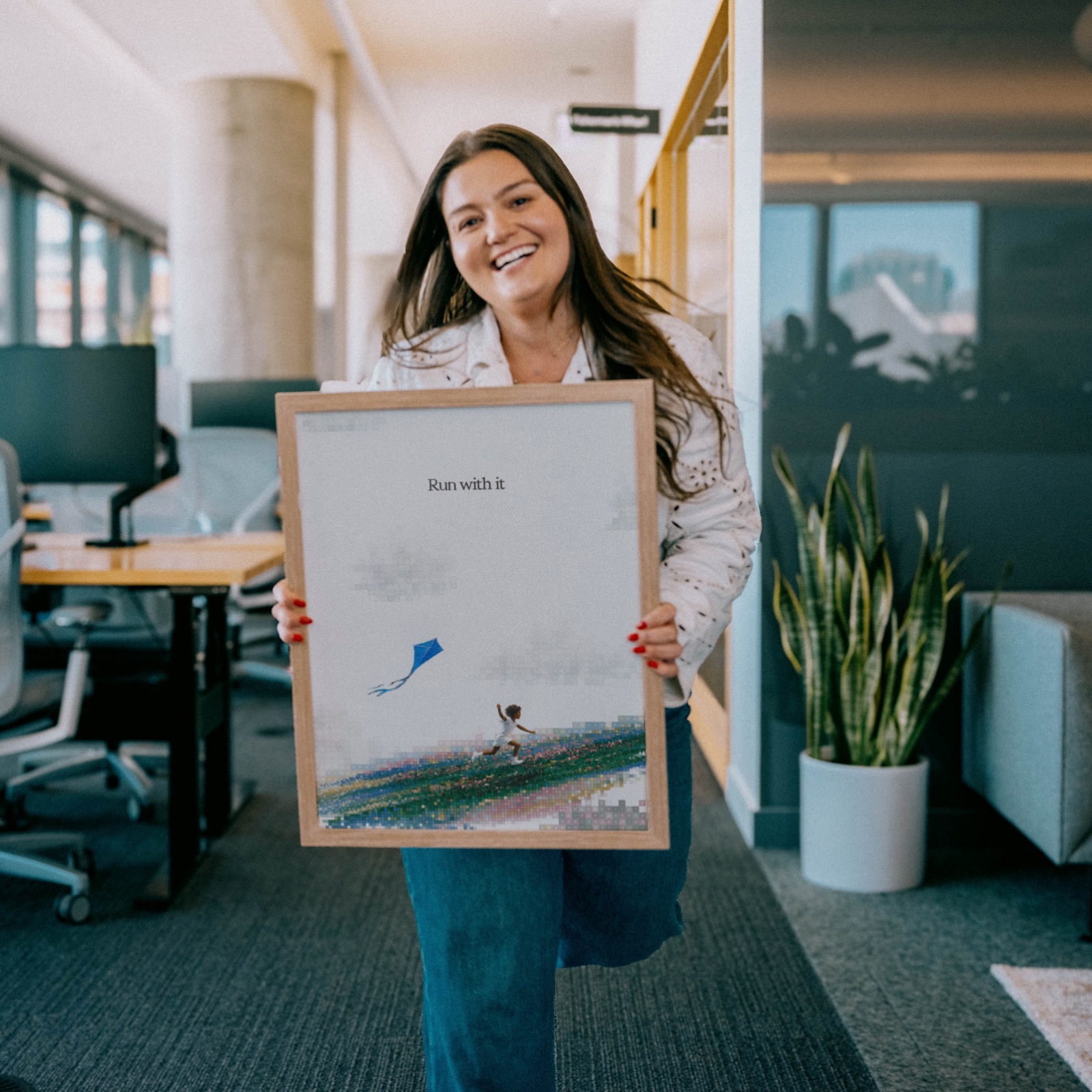
A framed print from Orb's new brand, held up in an office
Orb rebrand
Wordmark, typography, RGB palette, photography, values posters, and website · 2026
7 items
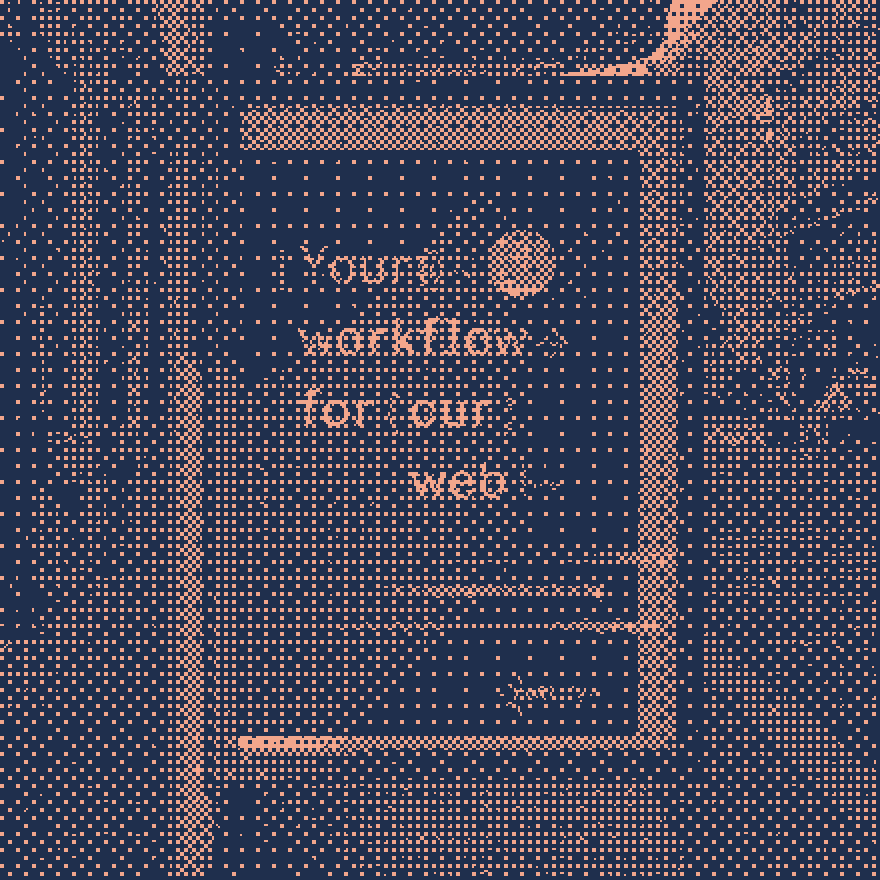
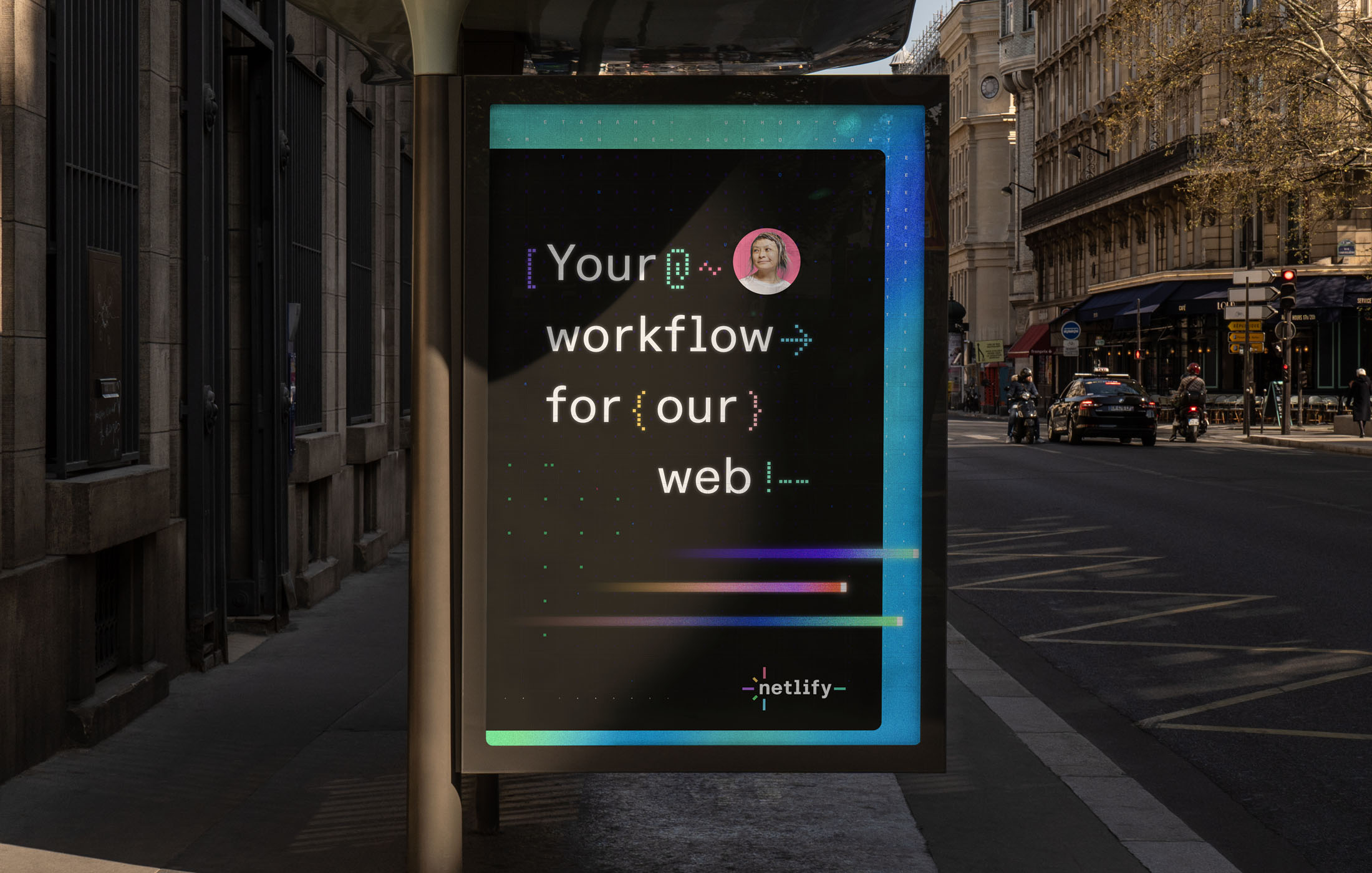
Netlify homepage hero mockup
Netlify rebrand
Logo, identity system, guidelines, and website for a developer platform · 2021–2023
6 items
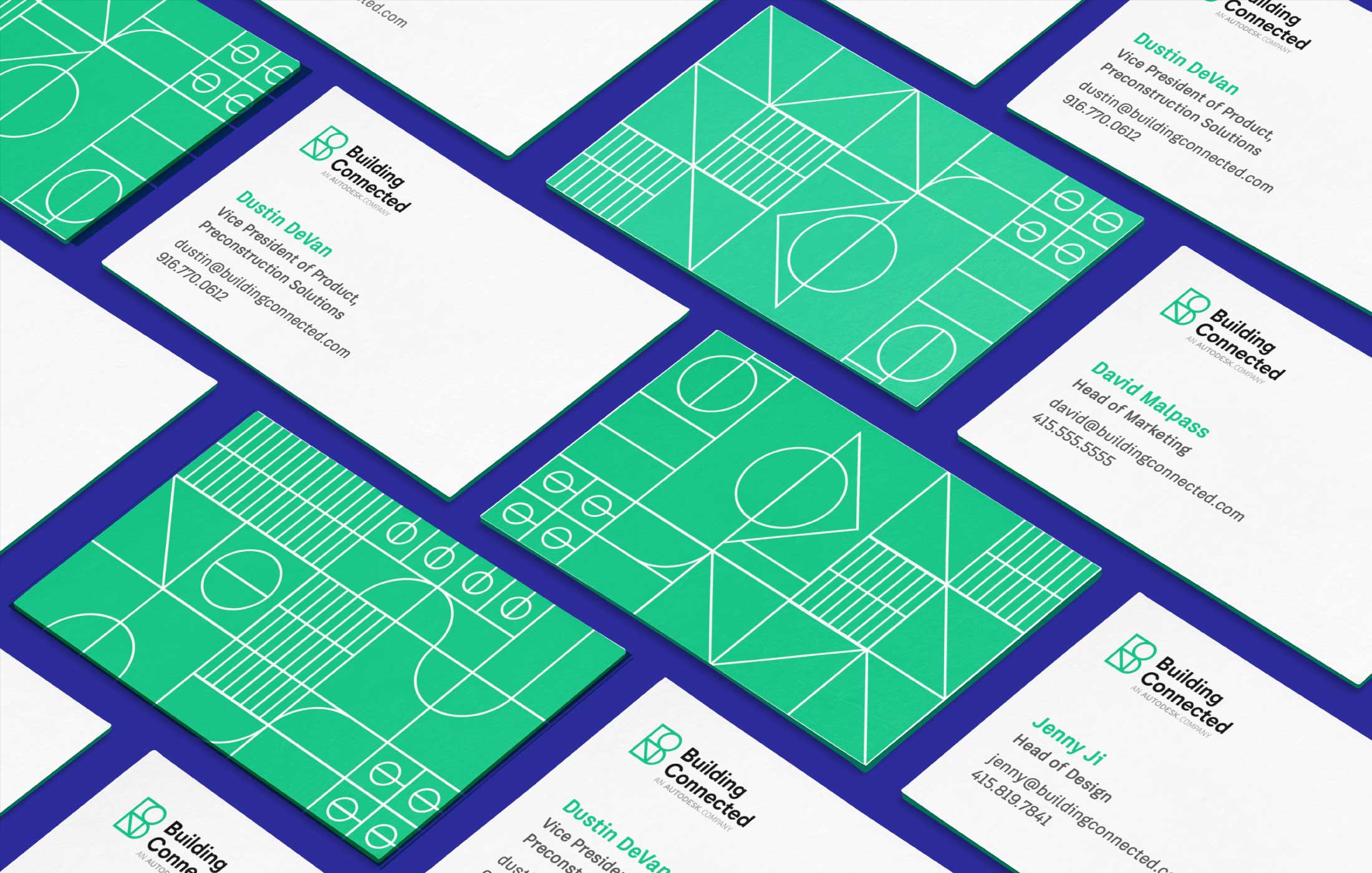
BuildingConnected business cards
BuildingConnected rebrand
Sixty hours of interviews turned into an identity and rollout · 2019
7 items
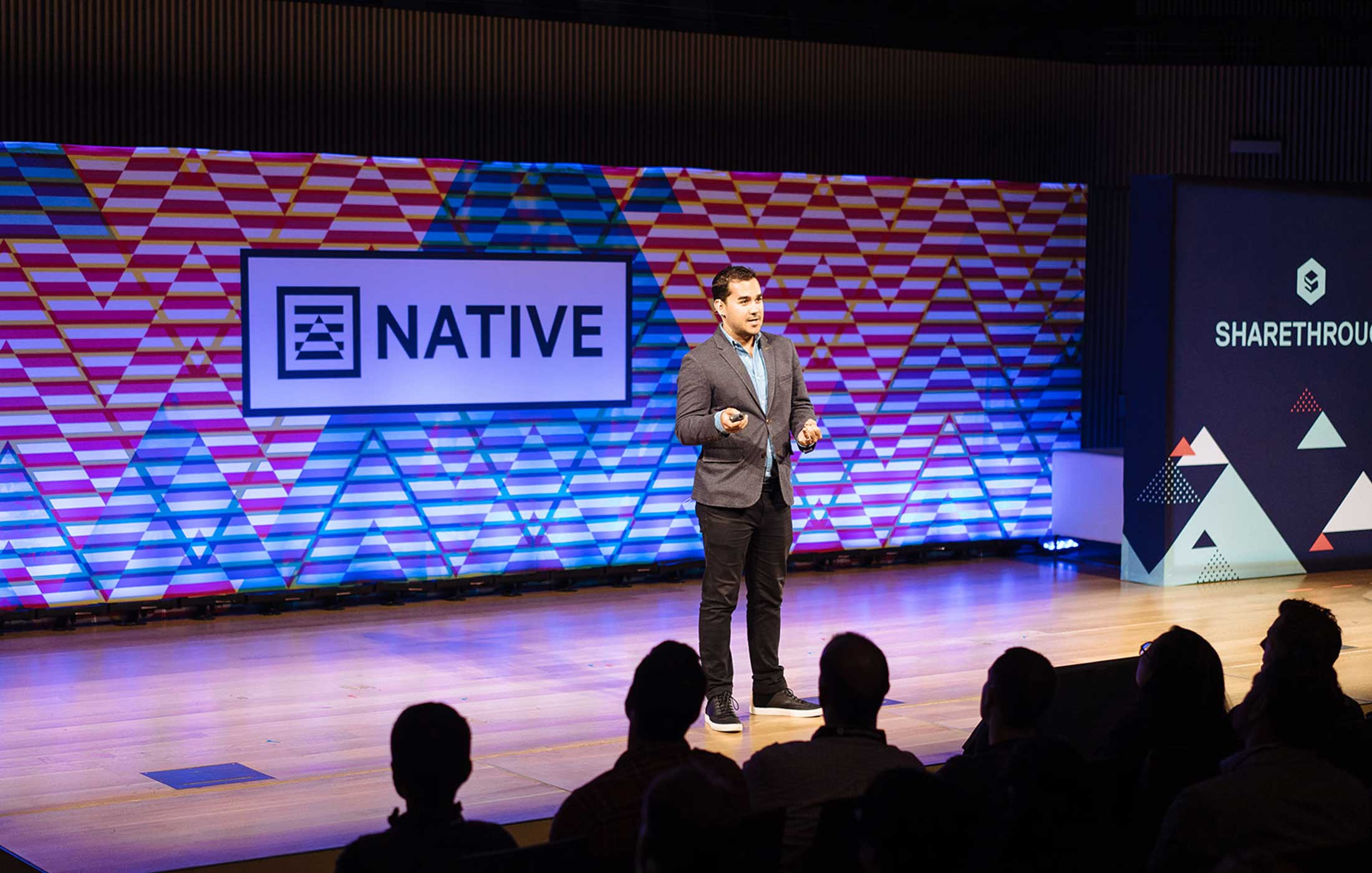
Native Ad Summit stage
Native Ad Summit
Identity and experience for a 700-person industry event, plus a national roadshow · 2014–2017
7 items
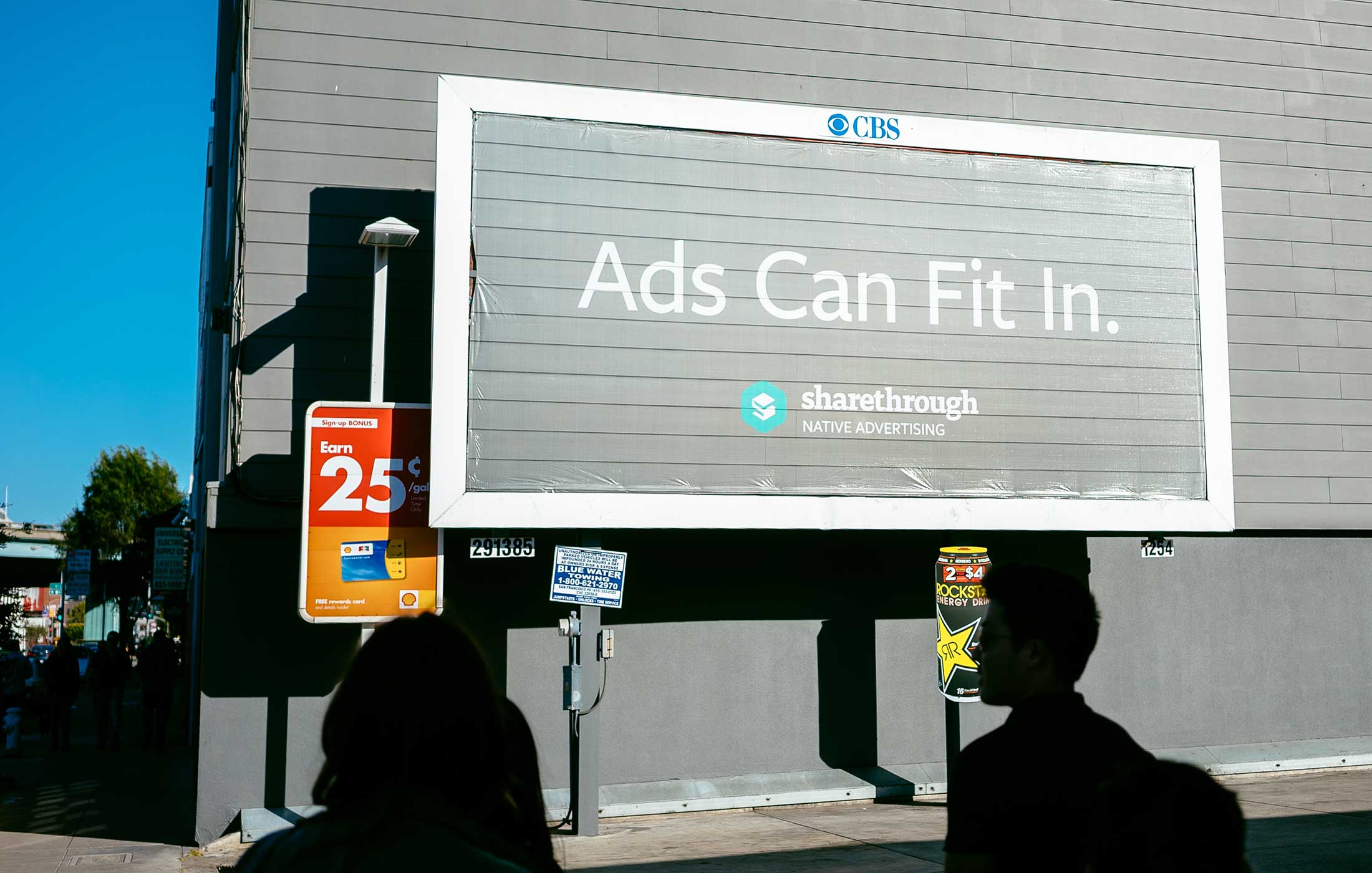
Sharethrough billboard from the Ads Can Fit In campaign
Sharethrough identity
Brand built from the ground up, the style guide, Calibrate, and the "Ads Can Fit In" billboards · 2012–2018
10 items
Apparel for Autodesk's hack-a-thon
Culture and employer brand
Hack-a-thons, onboarding, and internal programs run by the design team · 2018–2020
5 items

What people say

From the people I've worked with.

Who's reading?

Justin's ability to imagine and execute a creative vision is reason enough to hire him, but beyond that he's also a kind, empathetic leader. He's got the resolve to carry big ideas through to completion.

Jason LengstorfFounder of CodeTV. Managed Justin at Netlify.0.84 · design craft and creative vision

He is a thoughtful designer, a critical thinker, an empathetic leader, and a kind teammate. As an engineer, I truly value Justin's willingness to challenge me and be challenged.

Ryan MulliganSenior Design Engineer at Function Health. Worked with Justin at Netlify.0.17 · working across engineering, product, and marketing

Justin is a brilliant designer and fantastic manager. I worked alongside Justin for several years at Netlify, on many projects including the Netlify rebrand.

Tegan BarryTechnical Program Manager. Worked with Justin at Netlify.0.38 · design craft and creative vision

Justin has taught me how to be a leader and mentor who listens, is patient, and thinks critically. He's made a significant impression on me personally and in my career.

Ann Marie RileyContent Marketing Manager at HammerTech. Worked with Justin at BuildingConnected.1.00 · leading and growing designers

He leads by example, nurturing a culture of empathy, collaboration, and accountability. He truly cares about his team and is able to advocate for them, and for the role design plays, to the wider company.

Mike EverittBrand Designer at Databricks. Reported to Justin at BuildingConnected.1.00 · leading and growing designers

Justin encourages designers to take ownership and lead in their own right. He constantly worked to elevate the value of design at our company.

Leigh HillSenior Brand Designer at Secureframe. Reported to Justin at BuildingConnected.1.00 · leading and growing designers

He understands how to incorporate design into all other facets of an organization and a brand. He's thoughtful, curious, and never hesitates to ask hard questions.

Rob FanCo-founder of Sharethrough, now building Pendium.ai. Managed Justin at Sharethrough.0.91 · judgment, curiosity, and hard questions

He has provided me with invaluable guidance and tools that helped me grow in my career. I am extremely thankful to have had him as my manager and as a friend.

Helen HosainSenior Art Director and Design Lead at Salesforce. Reported to Justin at Sharethrough.1.00 · leading and growing designers

He comes to every situation with a well-defined point of view and the confidence to push it forward, as well as the open-mindedness to seek out opposing ideas.

Matt DominaCreative Design Lead at Sköna. Reported to Justin at Sharethrough.0.78 · judgment, curiosity, and hard questions

Thoughts

On design and management.

A little more about how I work, and the views I've developed over the course of my career.

What I do

Generalist by choice.

I consider myself a generalist who focuses on brand design and design management. Though I've spent recent years in leadership roles, I've kept my hands in graphic design, filmmaking, web design, photography, identity design, illustration, and product design. Think of me as a jack of all trades and a master of some.

As a design leader, I've assembled and managed strong, diverse in-house teams that work to understand, build, communicate, and grow brands. My teams invest in raising the design literacy of the organizations around them: facilitating Design Thinking workshops, advising teams where design methods are rarely applied, and collaborating with leadership to build better experiences for employees.

Some things I'm proud of

  • Led major rebrands for Sharethrough, BuildingConnected, Netlify, and Orb, and created identities for startups, event series, and volunteer initiatives.
  • Strengthened employer brands by redesigning onboarding and leading the creation of company culture programs.
  • Designed cross-team workflows and built brand management systems with in-house asset libraries of photography, iconography, illustration, and video.
  • Launched lectures and workshops that build design awareness and encourage employees to fold design techniques into their day-to-day work.
  • Directed and art directed digital, print, event, and out-of-home campaigns.

How I lead

Three lessons from ten years of managing.

About ten years ago I was offered the chance to manage a design team, and I hesitated. I had a false notion that introverts weren't cut out to be managers. That pushed me to study general management and get the training I needed. I took the leap, and these are the three lessons that shape the way I manage.

Being an introvert didn't hinder my ability to be a good manager. In many cases the trait I saw as a flaw actually helped me listen, observe, understand, and empathize with where each person was coming from and where they needed to go. It sounds simple and obvious, but listening to your team is the most impactful thing you can do.

People need managers who help them carve paths shaped by their specific needs, communication style, and aspirations. Managers do their best work when they understand the difference between coaching, mentoring, and directing, and when to use each to inspire growth and independence, improve performance, and relieve stress for the individual in front of them.

Perhaps the most important lesson is that org charts are poorly designed. Today's charts deny a manager's fundamental purpose, which is to support the team. Pyramid diagrams that put leaders at the top are everywhere, and they're a case of fixing something that wasn't broken. The original was just about perfect.

The first modern org chart was a diagram of the New York and Erie Railroad, drawn for Daniel McCallum in 1855. It's an organic, tree-like visualization where leadership is the roots. The reports on the sprawling branches are, in this metaphor, nourished by their managers, and the whole organization grows and bears fruit.

That is how I see management. Organizations are living, breathing, and fluid because they're made of people who are exactly that. Companies, teams, and employees don't flourish under charts that tell you who's boss. They thrive on their leaders' ability to encourage and cultivate growth.

Why I design and lead

Design is too important to leave to designers.

Throughout my career I've encountered countless interpretations of what design means to the people I've worked with, and I've struggled to put my own into words. Fortunately, Mike Monteiro offered a succinct definition that I often reference:

Design is the intentional solution to a problem within a set of constraints.Mike Monteiro

As accurate and concise as that is, it leaves out a few nuances I hold about our profession. And though I agree with him on many fronts, there's one point where Monteiro and I don't see eye to eye, and it illustrates why I design and what I believe design can be.

In a 2018 essay on social responsibility, "Design's Lost Generation," Monteiro argues that modern design problems have become so complex that we ought to need a license to solve them.

I agree that designers have let "move fast and break things" erode diligence and responsibility. But the idea of licensing design runs against a belief I'm passionate about: design is too important to be left to designers alone. If design is the intentional solution to a problem, anyone should be able to practice it. We can't dictate who designs and who doesn't.

The public often sees design as a magical power only a chosen few can wield. That misconception has, without a doubt, benefited our careers and made the profession a lucrative one. It also suppresses design's evolution and its potential.

Instead of regulating design as an exclusive craft, we should democratize it and equip people to use it. The worry that design will be used for reprehensible ends is valid, but the only way to counter it is with more design in more hands, not with exceptionalism. The knowledge and experience we've gathered as designers can improve other people's lives if we let it.

I design and lead because design is the most powerful tool anyone can use to make positive change, and it belongs in everyone's hands.